Blog

  • Airport Security Jobs in Pakistan: Eligibility, Application Process, and Career Path

    Airport Security Jobs in Pakistan: Eligibility, Application Process, and Career Path

    Airport Security Jobs in Pakistan: Eligibility, Application Process, and Career Path
    Airports are among the most tightly regulated and high-responsibility environments in the security sector. In Pakistan, airport security is primarily managed by the Airport Security Force (ASF), a federal law enforcement agency responsible for safeguarding airports, aircraft, and passengers across the country. For individuals interested in a structured, government-affiliated security career, airport security jobs offer stability, defined ranks, and long-term growth potential.
    This article explains what airport security jobs in Pakistan actually involve, who is eligible to apply, how the recruitment process works, and what kind of salary and career path to expect.

    What Does Airport Security Involve?
    Airport security personnel are responsible for a wide range of duties that go well beyond simply standing at a checkpoint. Core responsibilities typically include:
    Passenger and baggage screening using X-ray machines and metal detectors.
    Perimeter security to prevent unauthorized access to runways and restricted zones.
    VIP and aircraft protection, particularly during high-profile flights or state visits.
    Cargo and baggage handling supervision to prevent smuggling or security breaches.
    Emergency response coordination in case of security threats, suspicious items, or medical emergencies.
    Access control for staff, crew, and visitors entering restricted airport zones.
    Because aviation security is governed by international standards, ASF personnel are also trained according to protocols aligned with global aviation safety bodies.

    Who Manages Airport Security in Pakistan?
    The Airport Security Force (ASF) operates under Pakistan’s Ministry of Defence and is the primary agency responsible for civil airport security nationwide. It functions similarly to a paramilitary force, with a structured rank system, formal training academies, and standardized recruitment procedures. Unlike private security agencies, ASF positions are government jobs with associated benefits such as pensions and structured promotions.

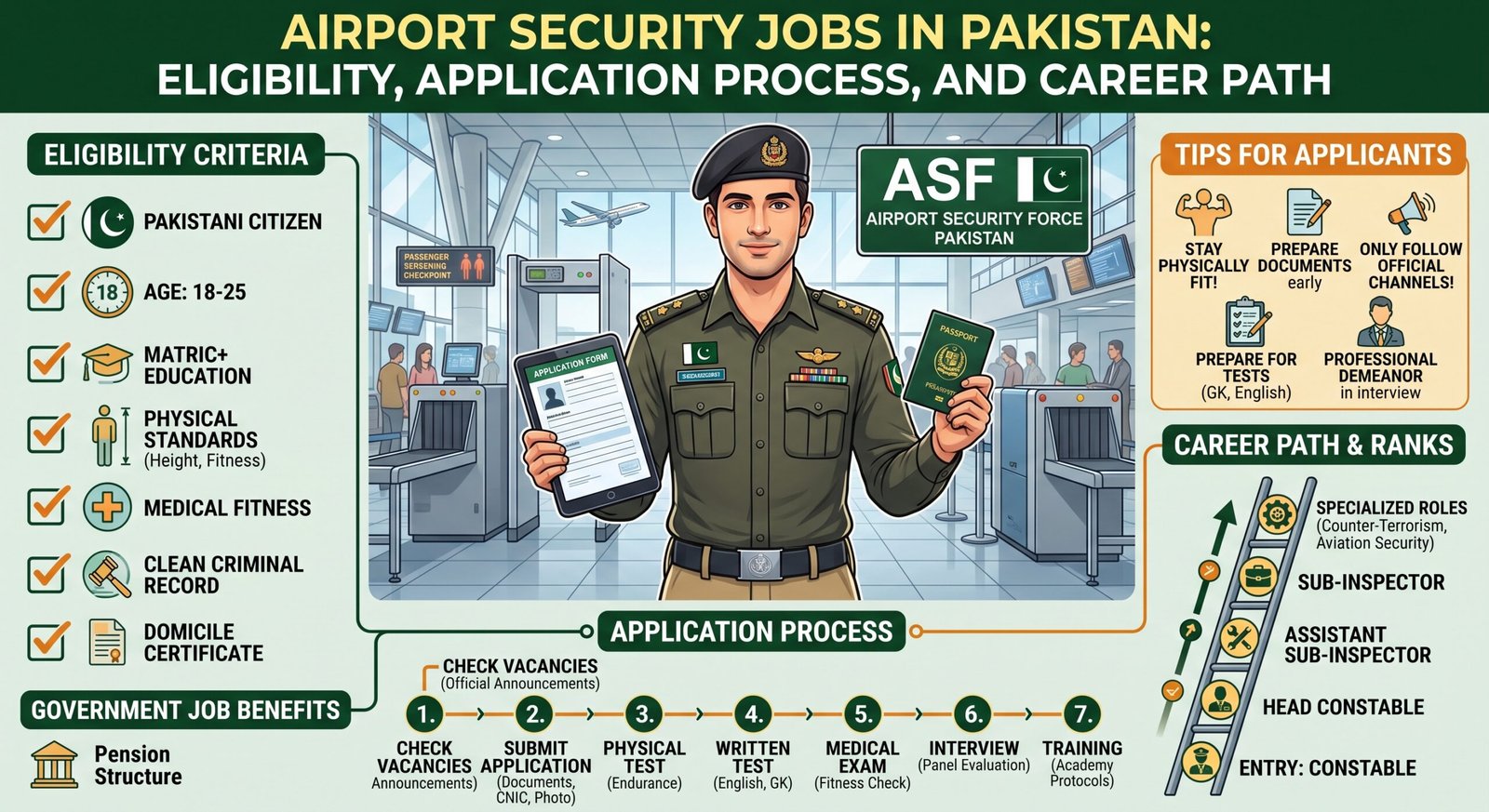
    Eligibility Criteria for Airport Security Jobs
    While specific requirements can vary slightly depending on the position and recruitment cycle, general eligibility criteria typically include:
    Nationality: Applicants must be Pakistani citizens.
    Age limit: Usually between 18 and 25 years for entry-level constable positions, though this can vary by post.
    Education: Matric is generally the minimum requirement for entry-level roles; higher posts may require intermediate or bachelor’s degrees.
    Physical standards: Minimum height, chest measurement (for male candidates), and overall physical fitness requirements apply, similar to other paramilitary forces.
    Medical fitness: Candidates must pass a medical examination confirming they meet health and fitness standards.
    Character certificate: A clean criminal record verified through local police is mandatory.
    Domicile certificate: Often required to confirm provincial residency status during recruitment.

    The Recruitment Process
    Airport security recruitment in Pakistan generally follows a multi-stage process:

    1. Application Submission
      Vacancies are announced through ASF’s official channels, national newspapers, and sometimes through Pakistan’s official job portals. Applications usually require submission of CNIC, educational certificates, domicile, and a recent photograph.
    2. Initial Screening
      Applications are reviewed for basic eligibility, including age, education, and domicile requirements.
    3. Physical Test
      Shortlisted candidates undergo a physical endurance test, which may include running, push-ups, and other fitness assessments depending on the specific post.
    4. Written Test
      A written examination assessing general knowledge, basic English, and sometimes specific aptitude related to the role.
    5. Medical Examination
      A thorough medical check-up to confirm fitness for duty, including vision and general health screening.
    6. Interview
      A final interview panel evaluates communication skills, confidence, and suitability for a security-sensitive role.
    7. Training
      Successful candidates undergo formal training at ASF training academies, covering physical training, aviation security protocols, and weapons handling where applicable.

    Salary and Benefits
    Airport security jobs through ASF typically offer government-scale salaries along with structured benefits:
    Entry-level Constable: Salary generally aligns with lower government pay scales, often supplemented with allowances for housing, medical, and duty-related expenses.
    Supervisory and Officer Ranks: Higher pay scales apply as personnel are promoted through the ranks over time.
    Additional benefits: Government employees typically receive pension benefits, medical coverage, and other standard civil service perks not commonly available in private security roles.
    Note: Exact pay scales are revised periodically by the government, so candidates should check ASF’s official announcements or recent government pay scale notifications for the most current figures.

    Career Growth in Airport Security
    One of the biggest advantages of joining ASF is the clear, rank-based promotion structure. Entry-level personnel typically begin as constables and can be promoted over time to head constable, assistant sub-inspector, sub-inspector, and higher supervisory or officer ranks based on performance, seniority, and internal examinations. Specialized training opportunities, including aviation security courses and counter-terrorism training, can further support career advancement.

    Tips for Applicants
    Stay physically fit year-round. Physical tests are a major screening stage, so consistent fitness preparation improves your chances significantly.
    Keep documents updated and ready. Domicile, CNIC, character certificate, and educational documents should be readily available when applications open.
    Follow official ASF announcements only. Always apply through verified, official channels to avoid recruitment scams.
    Brush up on basic English and general knowledge. Written tests often include these areas, so light preparation can make a noticeable difference.
    Present yourself professionally during interviews. Confidence, clear communication, and a calm demeanor are valued in security-sensitive roles.

    Final Thoughts
    Airport security jobs in Pakistan, particularly through the Airport Security Force, offer a structured and stable career path within the broader security industry. With clear eligibility requirements, a defined recruitment process, and long-term growth opportunities through the ranks, this path appeals to candidates seeking the stability of a government security role. Preparing documents early, maintaining physical fitness, and applying only through official channels are the most reliable ways to improve your chances of selection.
  • Security Jobs Abroad: A Guide to International Opportunities for Pakistani Workers

    Security Jobs Abroad: A Guide to International Opportunities for Pakistani Workers

    Security Jobs Abroad: A Guide to International Opportunities for Pakistani Workers


    For many skilled and semi-skilled workers, the security profession offers more than just a local job — it can be a gateway to working overseas. Gulf countries, parts of Europe, and several African and Asian nations regularly hire foreign security personnel to staff hotels, oil and gas facilities, residential compounds, and corporate offices. For Pakistani professionals, this represents a genuine opportunity to earn significantly higher wages while gaining international work experience.
    This guide looks at where these opportunities exist, what employers typically expect, and how to navigate the overseas application process safely and successfully.

    Why Work in Security Overseas?
    There are several practical reasons why people choose to pursue security work abroad rather than staying in the local market:
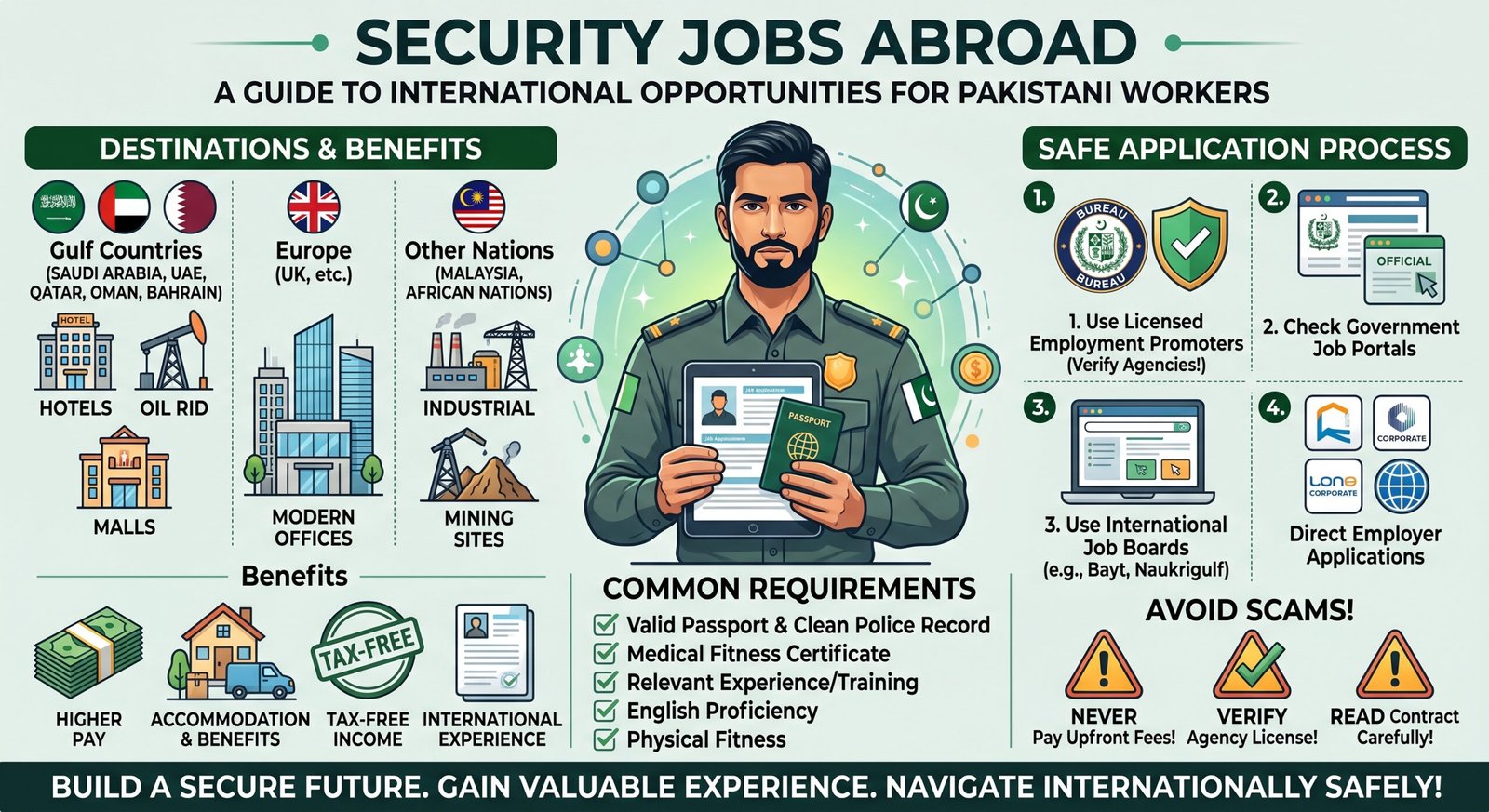
    Higher pay: Wages for similar roles are often three to five times higher than in Pakistan.
    Accommodation and benefits: Many overseas employers, especially in the Gulf, provide free housing, meals, and transport.
    Tax-free income: Several Gulf countries do not deduct income tax, increasing take-home pay.
    International experience: Working abroad adds credibility to a resume and can open doors to further career advancement.

    Popular Destinations for Security Jobs

    1. Saudi Arabia
      One of the largest employers of South Asian security staff. Roles are common in hospitals, residential compounds, oil facilities, and large commercial complexes. Most positions require a medical fitness certificate and police clearance from the home country.
    2. United Arab Emirates (UAE)
      Dubai and Abu Dhabi host a large number of security positions in hotels, malls, and corporate towers. The UAE often requires candidates to complete a locally recognized security training course (such as SIRA certification in Dubai) before they can legally work in the field.
    3. Qatar
      With major infrastructure and hospitality projects, Qatar regularly hires guards for residential, retail, and event security, particularly around large international events.
    4. Oman and Bahrain
      Smaller but steady markets for security personnel, particularly in hotels, gated communities, and corporate buildings.
    5. Malaysia
      A growing destination for South Asian workers, including in the security sector, particularly for industrial and commercial facility protection.
    6. African Nations (e.g., Nigeria, Kenya)
      Oil, gas, and mining companies in several African countries hire experienced security supervisors and risk management professionals, often through specialized international recruitment agencies.
    7. United Kingdom and parts of Europe
      While harder to access due to strict visa rules, some specialized roles — particularly in cybersecurity and corporate risk management — are open to qualified international applicants through sponsored work visas.

    Common Requirements for Overseas Security Jobs
    While exact requirements vary by country and employer, most international security positions ask for:
    Valid passport and clean police record from the home country.
    Medical fitness certificate, often including specific tests required by the destination country’s embassy.
    Relevant experience or training, particularly for supervisory or specialized roles.
    Security licensing or certification, such as SIRA (UAE) or country-specific equivalents.
    Basic English proficiency, especially for roles involving guest interaction in hotels or corporate settings.
    Physical fitness assessment, common for guard and patrol-based roles.

    How to Apply for Security Jobs Abroad

    1. Use Licensed Overseas Employment Promoters
      In Pakistan, all legal overseas recruitment must go through agencies registered with the Bureau of Emigration and Overseas Employment (BE&OE). Always verify an agency’s license before paying any fees or sharing documents.
    2. Check Government Job Portals
      The Pakistan Bureau of Emigration occasionally lists verified overseas vacancies, including security-related postings, on its official portal.
    3. International Job Boards
      Platforms like Bayt.com, GulfTalent, and Naukrigulf frequently post security vacancies specifically for Gulf countries and are widely used by Pakistani applicants.
    4. Direct Employer Applications
      Larger international companies, particularly in hospitality and oil and gas, sometimes accept direct applications through their corporate career pages, bypassing third-party agencies altogether.
    5. Referrals from Workers Already Abroad
      Many overseas security jobs are filled through word-of-mouth referrals from Pakistanis already working in that country, who can vouch for a candidate’s reliability.

    Expected Salary Ranges Abroad
    Salaries vary by country, role, and employer, but general estimates include:
    Saudi Arabia/UAE Security Guard: Roughly SAR 1,500–2,500 or AED 1,800–2,800 per month, often with accommodation included.
    Qatar Security Supervisor: Roughly QAR 2,500–4,000 per month.
    Specialized Risk/Corporate Security Roles (Europe/Africa): Can range significantly higher, often starting from USD 1,500–3,000 per month depending on experience and qualifications.
    These figures are general estimates only and can vary based on the specific employer, contract terms, and current market conditions, so it’s important to confirm details directly through verified job offers.

    How to Avoid Scams When Applying Abroad
    Unfortunately, fraudulent recruitment is a real risk in the overseas job market. To stay protected:
    Never pay large upfront “processing fees” before a contract is signed and verified.
    Verify the agency’s license number through Pakistan’s Bureau of Emigration website.
    Confirm the job offer directly with the employer if possible, especially for first-time applicants.
    Read the contract carefully before signing, paying close attention to salary, working hours, and benefits.
    Keep copies of all documents submitted to any recruitment agency.

    Final Thoughts
    Security jobs abroad can offer Pakistani workers a meaningful path toward better pay, valuable international experience, and long-term career growth. Success in this path depends heavily on choosing the right destination, meeting documentation and certification requirements, and applying through verified, legal channels. With careful preparation and due diligence against recruitment scams, an overseas security career can be a realistic and rewarding option.

  • Types of Security Jobs in Pakistan: Roles, Responsibilities, and Career Paths

    Types of Security Jobs in Pakistan: Roles, Responsibilities, and Career Paths

    Types of Security Jobs in Pakistan: Roles, Responsibilities, and Career Paths

    The word “security job” means very different things depending on the industry. A bank guard, a cybersecurity analyst, and a VIP bodyguard all fall under the same broad category, yet their daily responsibilities, required skills, and career paths are completely different. For anyone exploring a career in this field, understanding these distinctions is the first step toward choosing the right specialization.
    This article breaks down the major types of security jobs available in Pakistan today, explaining what each role actually involves, the skills needed, and where each career path can lead.

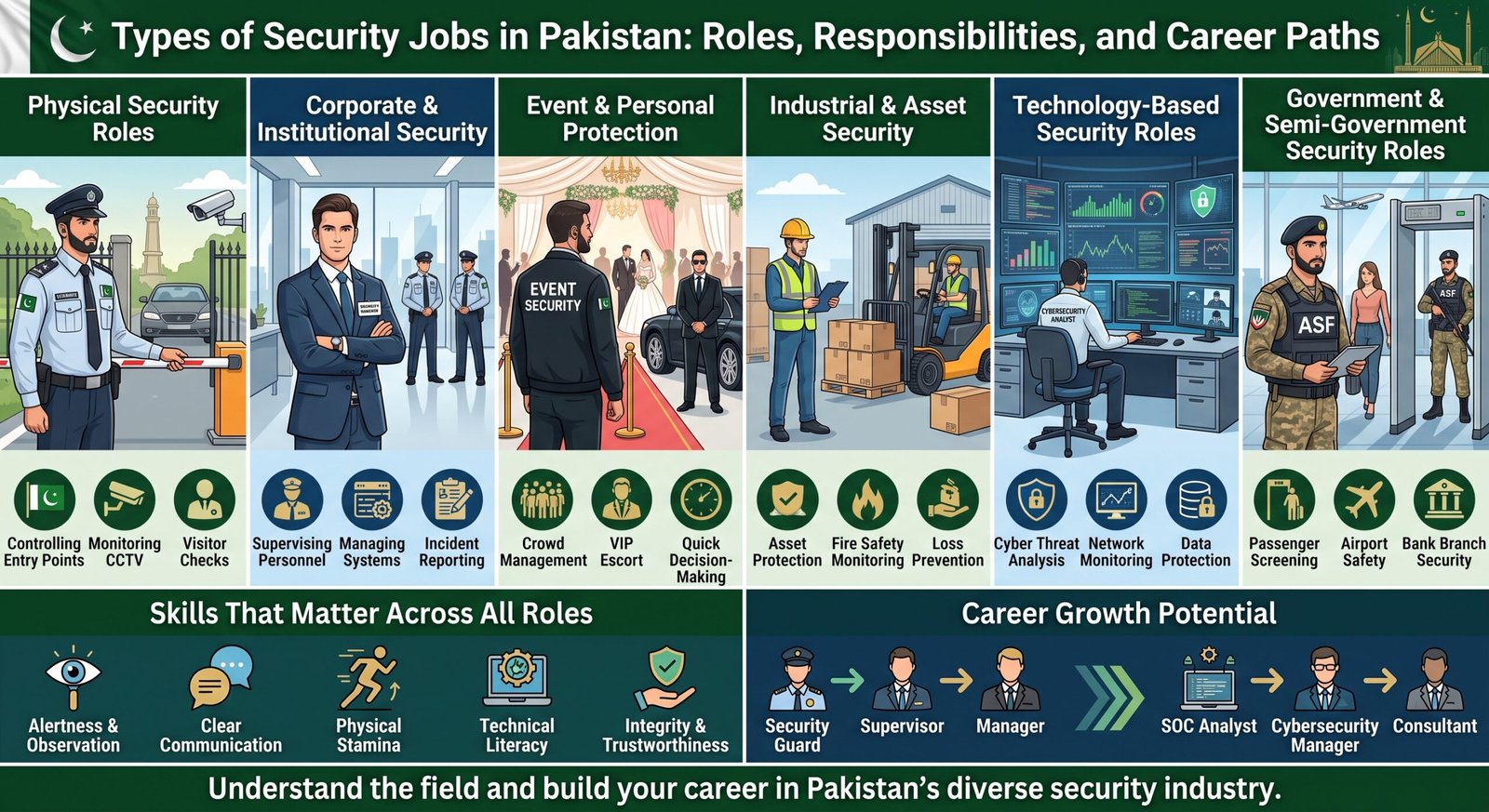
    1. Physical Security Roles
      Physical security remains the backbone of the security industry. These jobs focus on protecting people, property, and assets through direct presence and monitoring.
      Security Guard
      The most widely available role. Duties include controlling entry and exit points, checking visitor identification, monitoring CCTV where applicable, and conducting regular patrols. This role is common in residential societies, retail stores, schools, and offices.
      Gate/Access Control Officer
      A more specialized version of the guard role, focused specifically on managing vehicle and pedestrian access at gated facilities, factories, or housing societies. Strong attention to detail and record-keeping is essential.
      Patrol Officer
      Patrol officers are responsible for moving through assigned zones — often in vehicles — to check for suspicious activity across multiple sites. This role is common with private security agencies that serve several clients in one area.
    2. Corporate and Institutional Security
      These roles exist within structured organizational settings and often come with more defined hierarchies and benefits.
      Security Officer
      Found in banks, telecom companies, and corporate offices, this role involves supervising guards, managing access control systems, coordinating with law enforcement when needed, and handling incident reports. A security officer typically reports to a security manager.
      Security Supervisor
      Supervisors oversee teams of guards across one or more locations, manage duty rosters, conduct on-site training, and ensure compliance with company security policies.
      Security Manager
      A senior-level role responsible for designing and implementing an organization’s overall security strategy, managing budgets, liaising with police and emergency services, and overseeing all security staff.
    3. Event and Personal Protection Security
      This category deals with protecting individuals or managing security at temporary gatherings.
      Event Security Personnel
      Responsible for crowd control, bag checks, and managing entry at concerts, weddings, and corporate events. Quick decision-making and physical fitness are valuable here.
      Close Protection Officer (Bodyguard)
      Provides direct, personal security to high-profile individuals such as executives or public figures. This role often requires prior law enforcement or military experience, along with specialized close-protection training.
    4. Industrial and Asset Security
      Factories, warehouses, and construction sites require a different security approach focused on asset and worker safety.
      Industrial Security Guard
      Monitors entry and exit of goods, vehicles, and workers, while also watching for fire hazards and unsafe practices on factory floors.
      Loss Prevention Officer
      Common in large retail chains and warehouses, this role focuses specifically on preventing theft, both from external sources and internal employees, often through a mix of observation and inventory audits.
    5. Technology-Based Security Roles
      As businesses digitize, demand for technical security expertise has grown sharply in Pakistan, particularly in banking, telecom, and IT sectors.
      Cybersecurity Analyst
      Monitors networks for threats, investigates security breaches, and implements protective measures against hacking and data theft. Requires a background in computer science or IT, along with familiarity with security tools.
      SOC (Security Operations Center) Analyst
      Works within a dedicated team that continuously monitors an organization’s systems for suspicious activity, often in shifts, using specialized monitoring software.
      CCTV/Surveillance System Operator
      Focuses specifically on monitoring camera feeds across a facility, flagging unusual activity in real time, and maintaining surveillance equipment.
      IT Security Consultant
      An advisory role, often freelance or contract-based, helping organizations design secure IT infrastructure and conduct vulnerability assessments.
    6. Government and Semi-Government Security Roles
      Pakistan’s public sector also offers structured security career paths.
      Airport Security Officer
      Employed through agencies like the Airport Security Force (ASF), these officers manage passenger screening, baggage checks, and overall airport safety protocols.
      Bank Security Guard (State-Regulated)
      Banks in Pakistan are required to maintain licensed armed or unarmed guards depending on branch size and location, often coordinated through approved security agencies.

    Skills That Matter Across All Security Roles
    While each role has its own specific requirements, a few core skills are valued across almost every security job in Pakistan:
    Alertness and observation: The ability to notice unusual behavior or irregularities quickly.
    Clear communication: Especially important when coordinating with team members or reporting incidents.
    Physical stamina: Relevant for guard, patrol, and event roles requiring long shifts or standing duty.
    Technical literacy: Increasingly important even in traditional roles, as CCTV systems and digital access logs become standard.
    Integrity and trustworthiness: Since security personnel are often given access to sensitive areas and information, a clean record and reliable character are non-negotiable.

    Career Growth Across Security Fields
    One advantage of the security industry is that career growth is rarely a dead end. A guard with consistent performance can move into supervisory roles within a few years. Similarly, an IT graduate starting as a SOC analyst can progress toward becoming a cybersecurity manager or consultant. Choosing a specialization early — whether physical, corporate, or technical — helps in building relevant experience and certifications faster.

    Final Thoughts
    Security jobs in Pakistan are far more diverse than they might initially appear. From frontline guard duty to advanced cybersecurity roles, each specialization comes with its own skill requirements, work environment, and growth trajectory. Understanding these distinctions allows job seekers to choose a path that matches their strengths, whether that’s physical presence and vigilance or technical expertise in digital security.

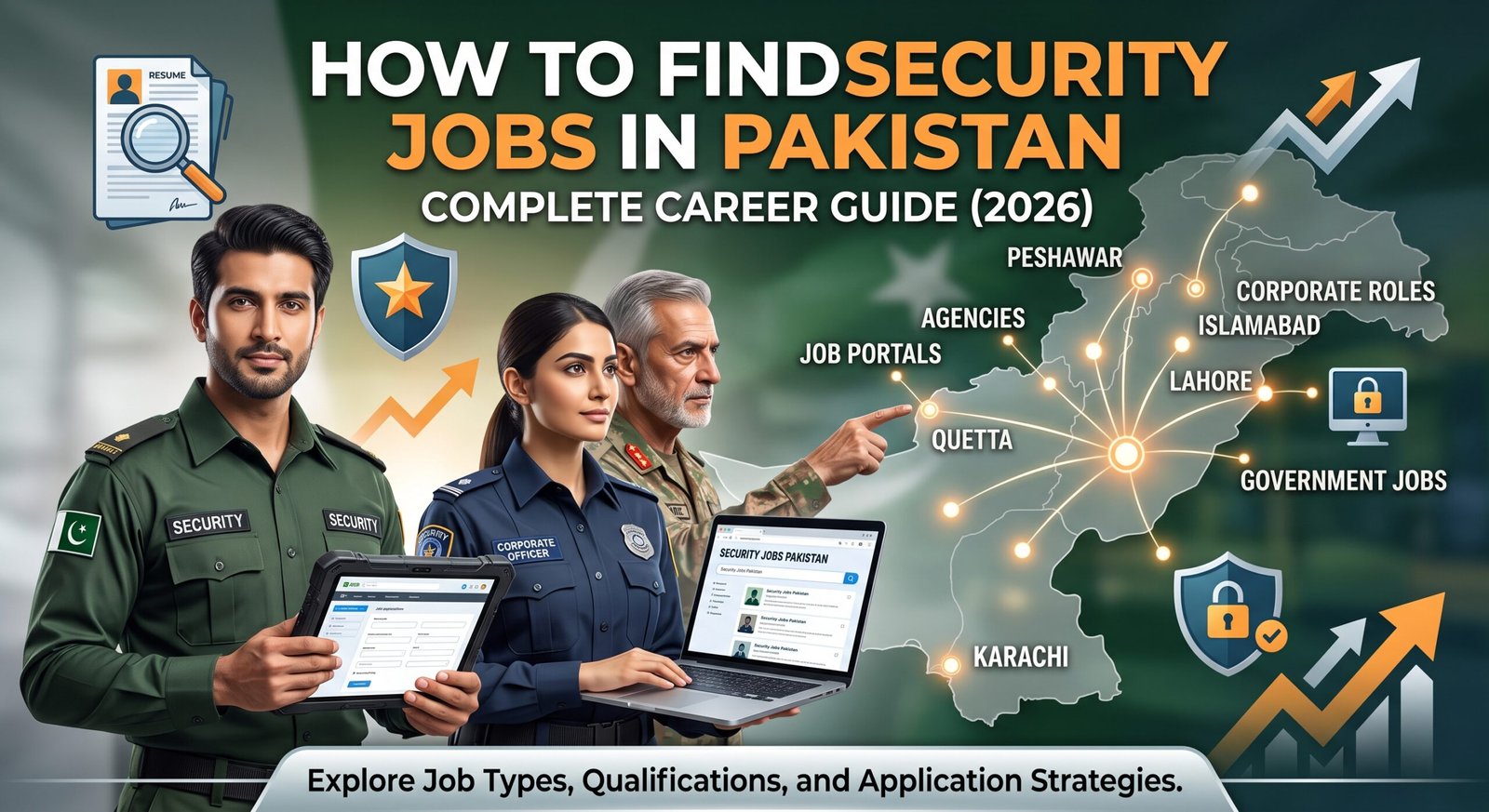
  • How to Find Security Jobs in Pakistan: A Complete Career Guide (2026)

    How to Find Security Jobs in Pakistan: A Complete Career Guide (2026)

    How to Find Security Jobs in Pakistan: A Complete Career Guide (2026)

    The security industry in Pakistan has grown rapidly over the past decade. From corporate offices and banks to shopping malls, residential societies, and industrial plants, the demand for trained security personnel continues to rise every year. Whether you’re a fresh graduate, an ex-army or ex-police professional, or someone looking for a stable career switch, security jobs offer a reliable income with clear paths for growth.
    This guide explains exactly how to find security jobs in Pakistan — from understanding job types and qualifications to applying through the right channels and negotiating a fair salary.

    Why Consider a Career in Security?
    Security jobs in Pakistan are appealing for several practical reasons:
    Consistent demand: Almost every business — from a small retail shop to a multinational corporation — needs security personnel.
    Low entry barrier: Many entry-level roles don’t require a university degree.
    Career progression: Guards can advance to supervisor, security officer, or even security manager roles with experience and training.
    Diverse specializations: Options range from physical security guards to cybersecurity analysts, offering paths for different skill sets.

    Types of Security Jobs Available in Pakistan
    Before searching for a job, it helps to know which category fits your background and goals.

    1. Security Guard / Watchman
      The most common entry point. Responsibilities include monitoring entry points, checking visitors, and patrolling premises. No formal education is usually required, though basic literacy and physical fitness are expected.
    2. Corporate / Office Security Officer
      These roles are common in banks, telecom companies, and multinational offices. Employers often prefer candidates with a matric or intermediate qualification and prior experience, sometimes with a military or police background.
    3. Event and VIP Security
      This involves protecting individuals or managing crowd control at events, weddings, and concerts. Physical fitness, alertness, and sometimes prior defense experience are valued here.
    4. Industrial and Factory Security
      Found in manufacturing plants and warehouses, this role focuses on asset protection, fire safety awareness, and access control.
    5. Cybersecurity Jobs
      A fast-growing field for those with an IT background. Roles include security analyst, network security engineer, and SOC (Security Operations Center) analyst. These positions typically require a degree in computer science and relevant certifications.
    6. Private Security Companies (Security Guard Agencies)
      Many candidates are hired through licensed security agencies that supply trained guards to client businesses across cities like Karachi, Lahore, and Islamabad.

    Qualifications and Skills Employers Look For
    Requirements vary by role, but most employers in Pakistan look for:
    Education: Matric is the minimum for guard-level roles; cybersecurity roles usually need a relevant bachelor’s degree.
    Physical fitness: Especially important for guard, patrol, and event security roles.
    Background and police clearance: A clean character certificate is mandatory for almost all security positions.
    Basic training: Many agencies provide in-house training, but having a recognized security guard certification gives you an advantage.
    Communication skills: Particularly important for corporate and front-desk security roles where interaction with visitors and staff is frequent.
    Technical skills: For cybersecurity roles, certifications like CompTIA Security+, CEH, or relevant degrees are highly valued.

    Where to Search for Security Jobs in Pakistan
    Here are the most effective and commonly used channels:

    1. Online Job Portals
      Websites such as Rozee.pk, Mustakbil, and Indeed Pakistan regularly post security job openings from verified companies. Set up job alerts using keywords like “security guard,” “security officer,” or “security analyst” to get notified instantly.
    2. Security Agency Offices
      Many licensed security companies hire directly. Visiting their offices in major cities or checking their official websites can lead to faster hiring, especially for guard-level positions.
    3. LinkedIn
      For corporate and cybersecurity roles, LinkedIn is increasingly used by HR departments in Pakistan. Building a complete profile and connecting with HR professionals in the security industry can open doors.
    4. Newspaper Classifieds
      Traditional but still effective, especially for government and semi-government security postings advertised in major Pakistani newspapers.
    5. Referrals and Networking
      A large percentage of security jobs in Pakistan, especially at the supervisory level, are filled through personal referrals. Connecting with people already working in the field can significantly improve your chances.
    6. Government and Semi-Government Openings
      Organizations like NADRA, airports (via ASF), and various public sector institutions periodically announce security staff vacancies through official notices and newspapers.

    Expected Salary Range
    Salaries vary significantly based on city, employer, and role:
    Security Guard: Roughly PKR 25,000–35,000 per month in major cities.
    Security Supervisor/Officer: Roughly PKR 40,000–70,000 per month.
    Cybersecurity Analyst: Roughly PKR 80,000–200,000+ per month, depending on experience and certifications.
    Note: These figures are general estimates and can vary by company size, city, and current market conditions, so it’s wise to confirm current rates directly with employers or recent job listings.

    Tips to Increase Your Chances of Getting Hired
    Get certified. A basic security guard training certificate or a relevant IT security certification can set you apart from other applicants.
    Prepare your documents in advance. Keep your CNIC, character certificate, educational documents, and experience letters ready.
    Tailor your resume. Highlight relevant experience such as military, police, or prior security work clearly at the top.
    Apply to multiple channels simultaneously. Don’t rely on just one job portal or agency — apply broadly to increase your odds.
    Be honest in interviews. Security roles require trust, so employers value honesty and a clean background above almost everything else.
    Build a professional network. Stay in touch with former colleagues and supervisors who may know about upcoming openings.

    Final Thoughts
    Finding a security job in Pakistan doesn’t have to be difficult if you approach it strategically. Start by identifying which type of security role matches your background and skills, gather the right documents and certifications, and use a mix of online portals, agencies, and personal networking to maximize your chances. With consistent effort and the right preparation, you can secure a stable position in this steadily growing field.